Better Skin starts with Knowledge.

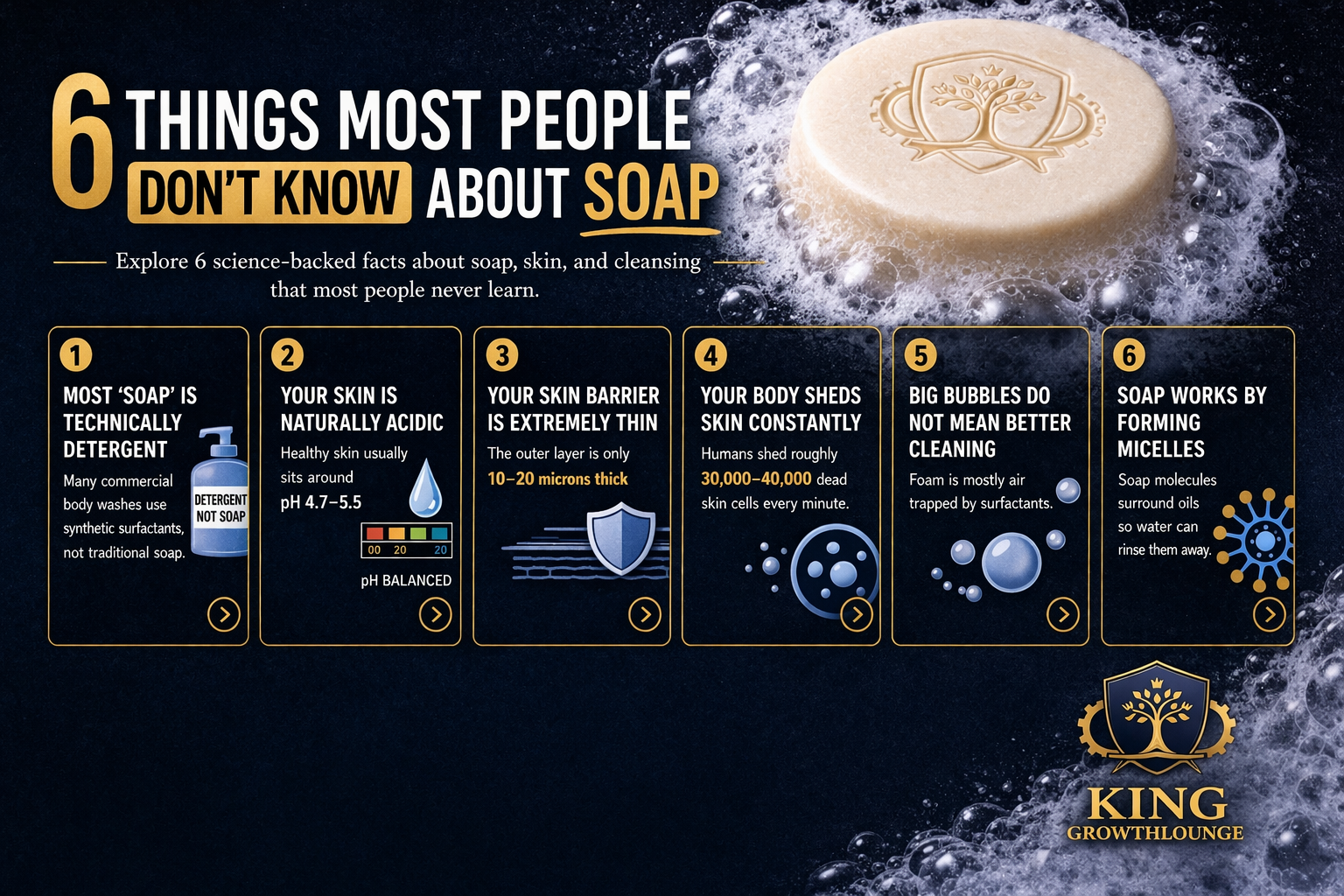
An informational graphic titled '6 Things Most People Don't Know About Soap' with six facts about soap, skin, and cleansing, accompanied by illustrations of soap, pH levels, skin, bubbles, and soap molecules. The branding at the bottom indicates 'King Growth Lounge.'

Understand your skin. Choose better soap
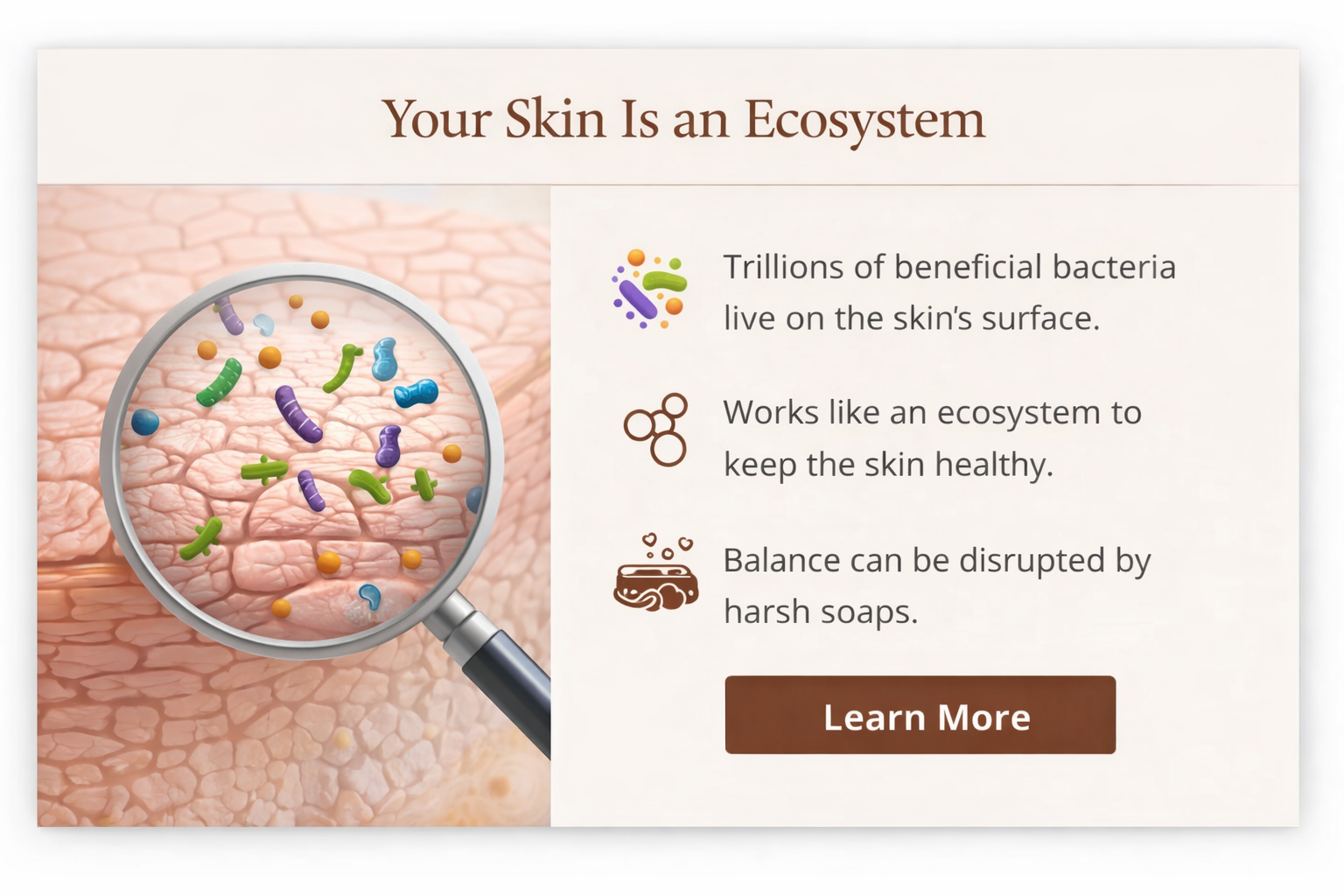
Close-up illustration of skin surface with magnifying glass showing beneficial bacteria, accompanied by text explaining the skin's ecosystem, bacteria's role, and effects of harsh soaps.
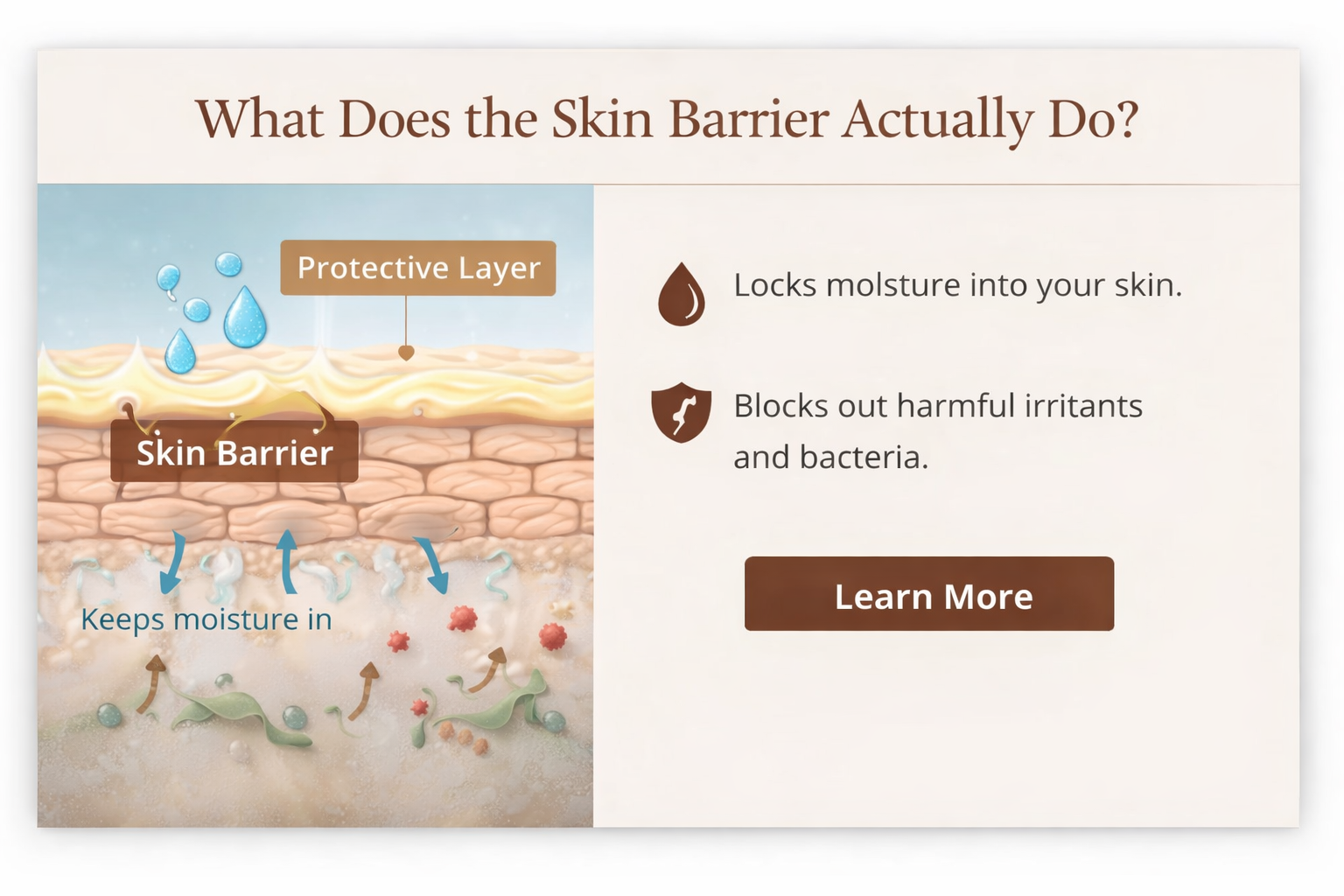
Diagram illustrating how the skin barrier protects the skin. It shows a protective layer, a skin barrier keeping moisture in, and how it blocks harmful irritants and bacteria. Accompanying text explains moisture retention and blocking irritants.
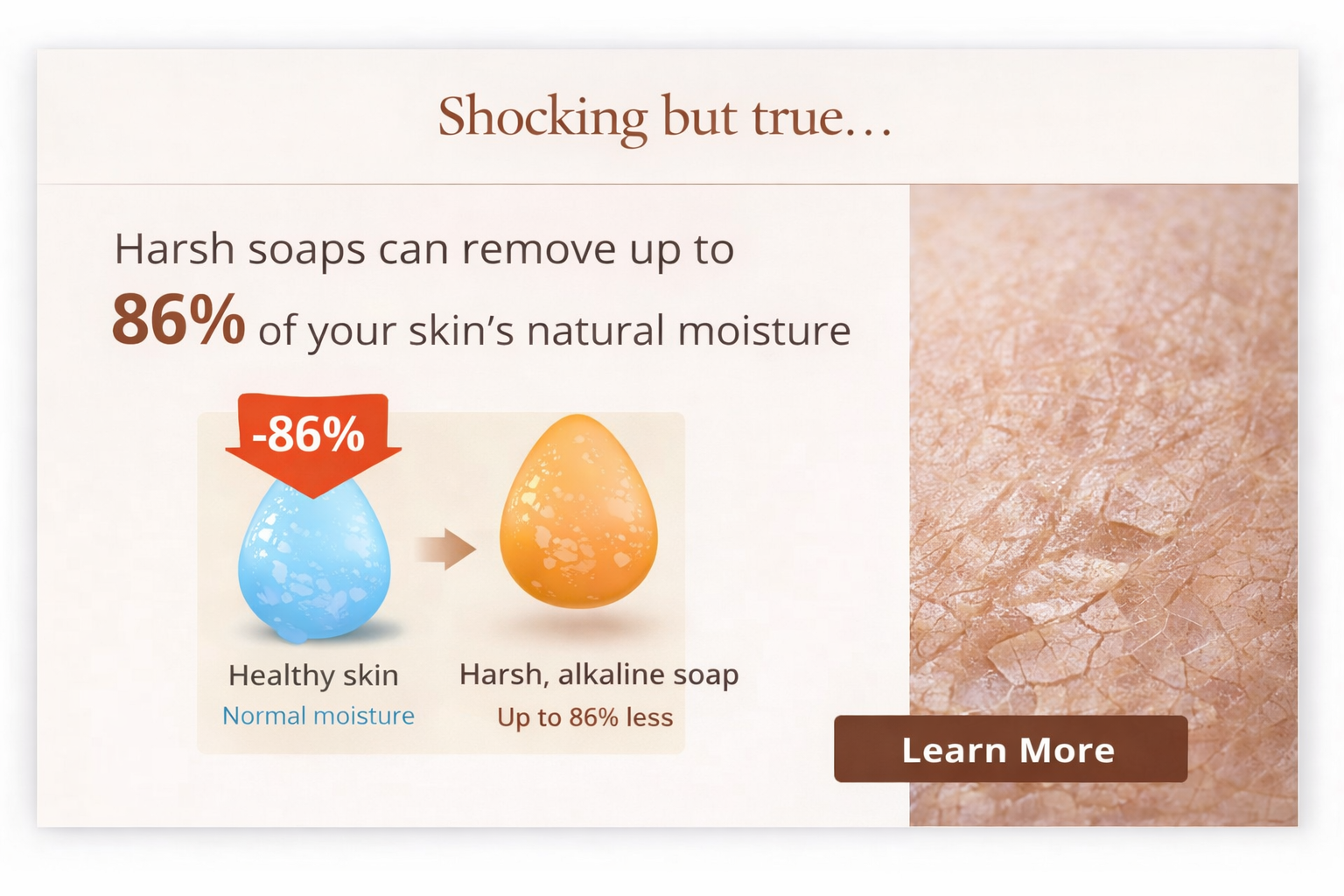
An infographic showing that harsh soaps can remove up to 86% of your skin's natural moisture compared to healthy skin. The image features a blue water droplet labeled 'Healthy skin' and an orange droplet labeled 'Harsh, alkaline soap,' with a red arrow indicating 86% less moisture. There is a close-up image of dry, cracked skin on the right side and a brown button with white text that says 'Learn More.'
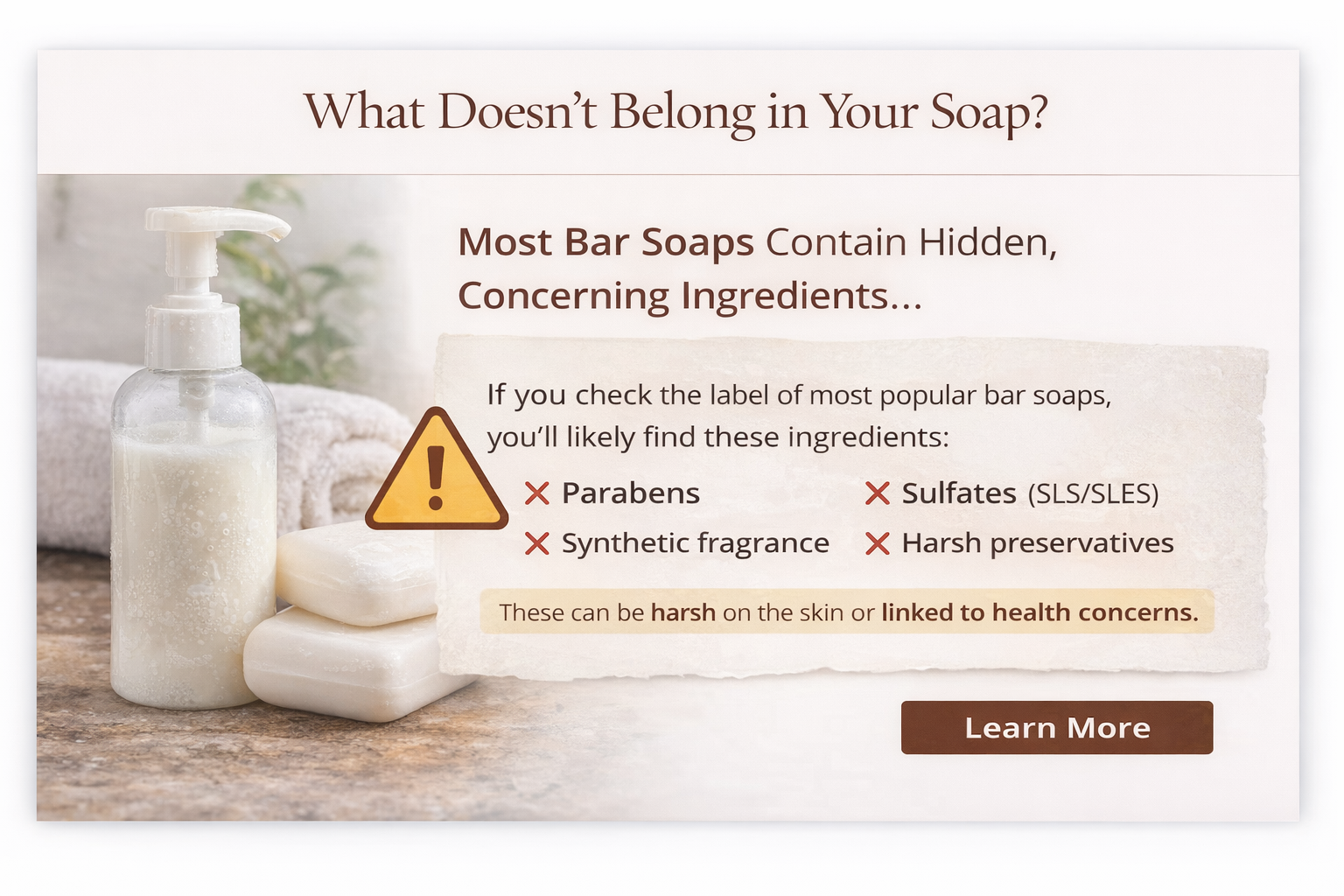
An infographic that questions what doesn't belong in soap, highlighting common harmful ingredients like parabens, sulfates, synthetic fragrance, and preservatives. It shows a soap dispenser, a bar soap, and a towel.
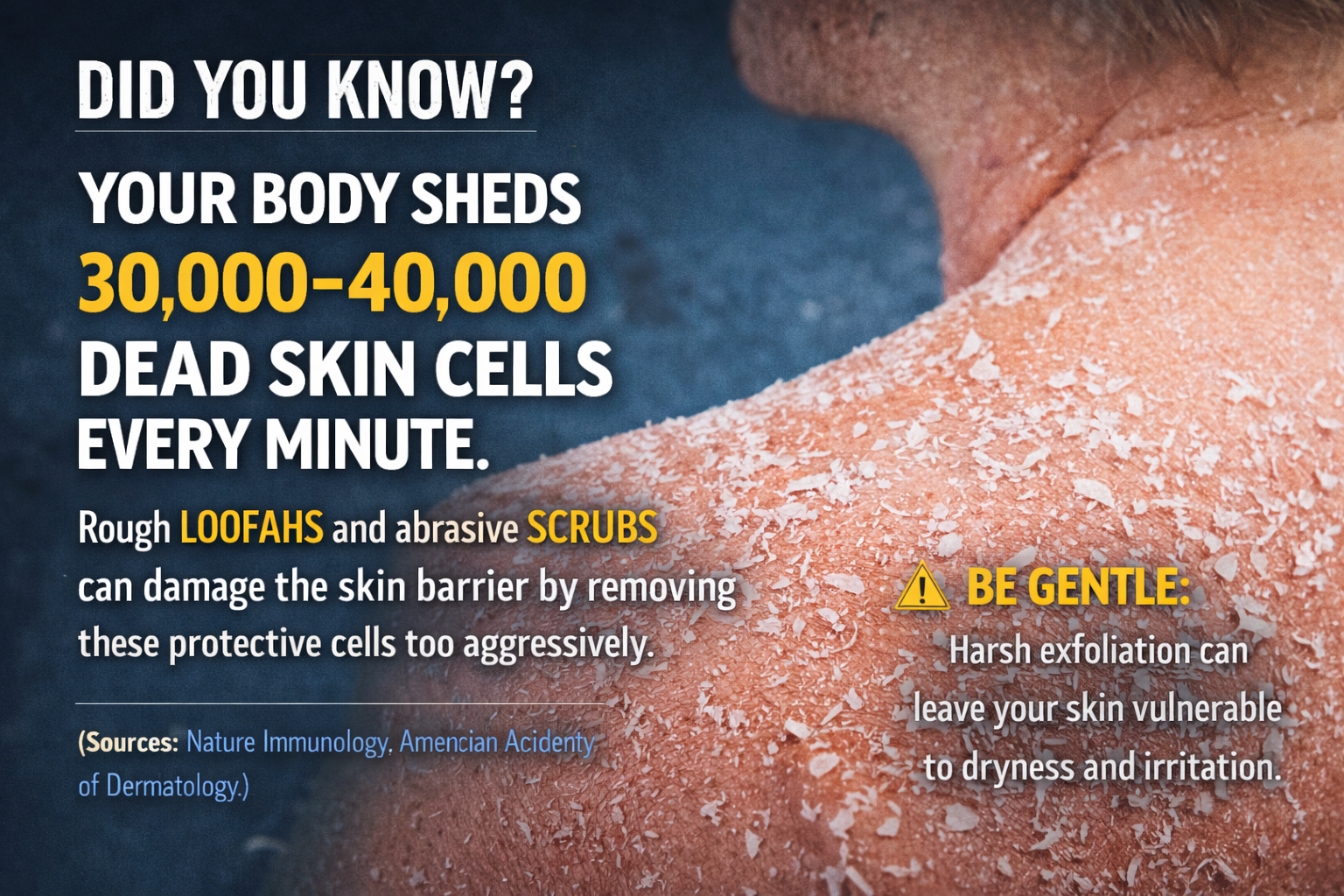
Close-up of rough, flaky exfoliating skincare product on a person's skin with warning text about skin shedding dead skin cells and caution against harsh scrubs.
Healthy Skin is anything but squeaky clean
— Whitney Bowe,M.D
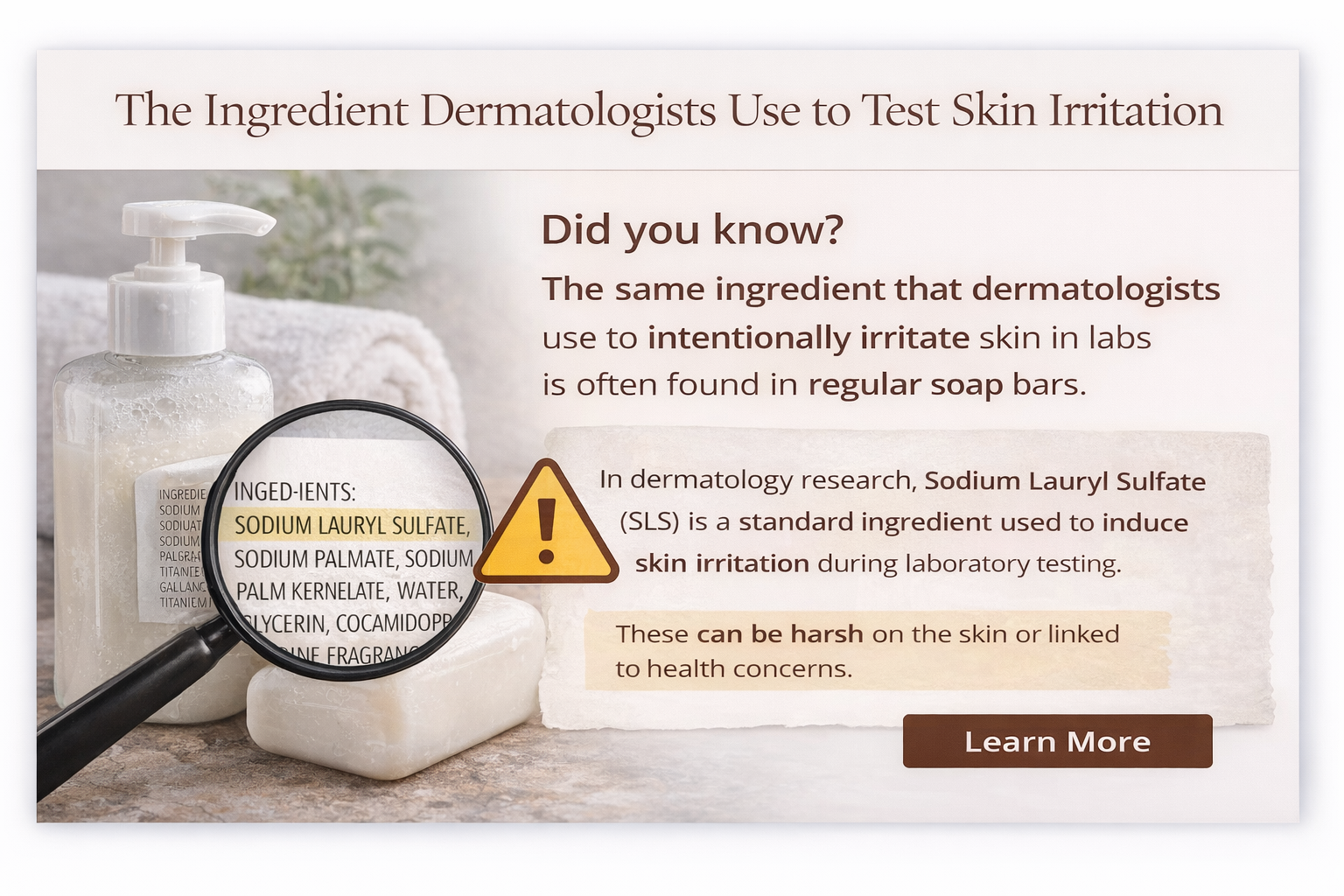
Information about the use of sodium lauryl sulfate in skincare testing, showing a soap bar, a pump bottle, a magnifying glass highlighting ingredients listing sodium lauryl sulfate, and a warning symbol, with text explaining its role and potential skin irritation.

tap each + to learn 3 surprising fact about soap.

  • Soap doesn’t work like a disinfectant.

    Instead, soap molecules attach to oils, dirt, and microbes on your skin.

    When you rinse with water, those particles get lifted and washed away.

    That’s why proper handwashing with soap can reduce infectious disease transmission by up to 30–40%, according to global public health studies.

  • Your skin naturally produces oils called sebum.

    These oils help:

    • maintain moisture

    • support the skin barrier

    • protect beneficial microbes living on your skin

    Over-cleansing or using harsh soaps can strip these oils faster than your skin can replace them.

  • Traditional soap is created through a process called saponification.

    This reaction occurs when oils or fats combine with an alkaline substance.

    The result forms soap molecules that can bind to both water and oils, allowing dirt and grime to be rinsed away.

    This chemistry has been used for thousands of years to create cleansing bars.
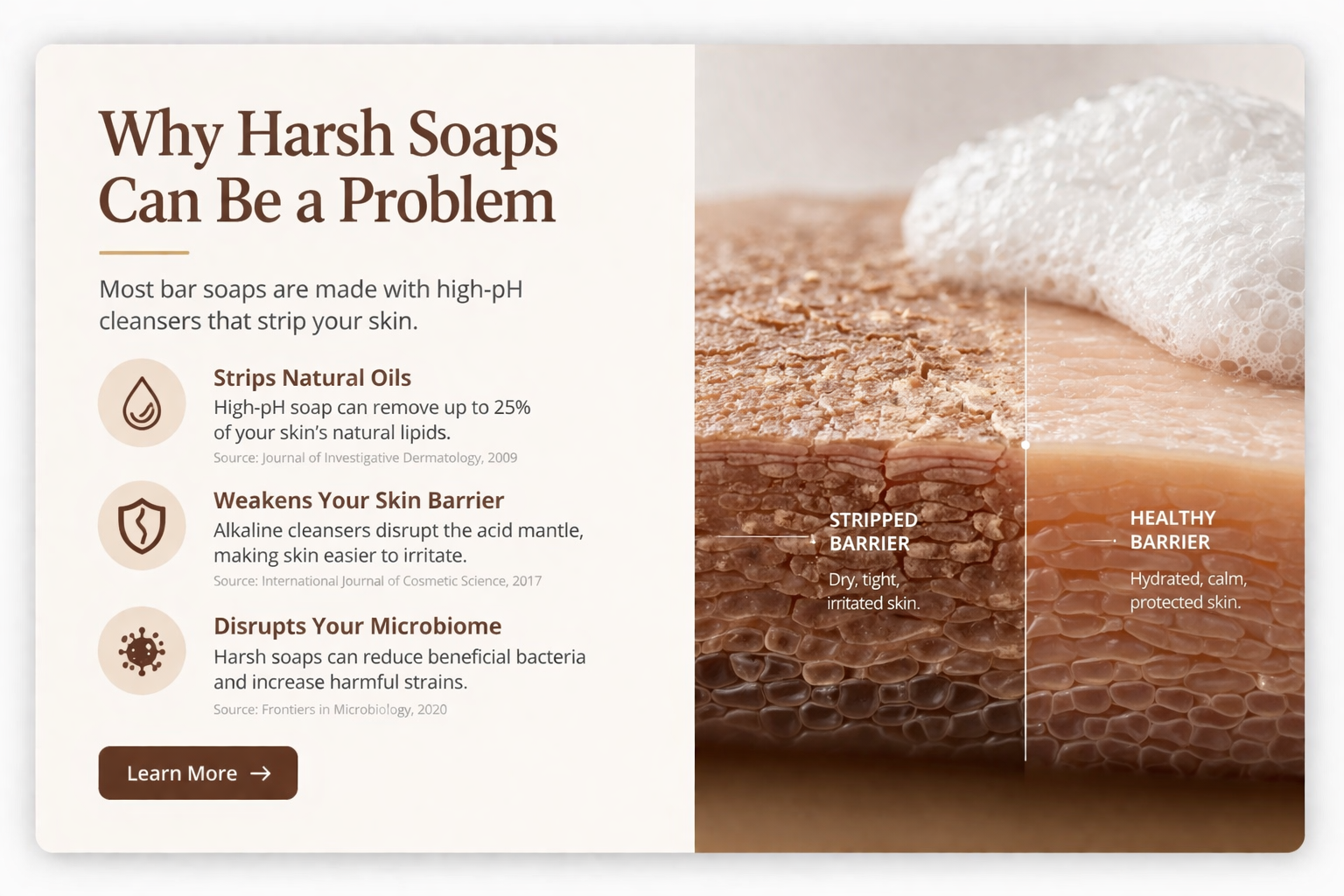
Infographic comparing stripped and healthy skin barriers. The stripped barrier appears dry, tight, and irritated, while the healthy barrier is hydrated, calm, and protected. Text explains that harsh soaps can strip natural oils, weaken the skin's barrier, and disrupt the microbiome.

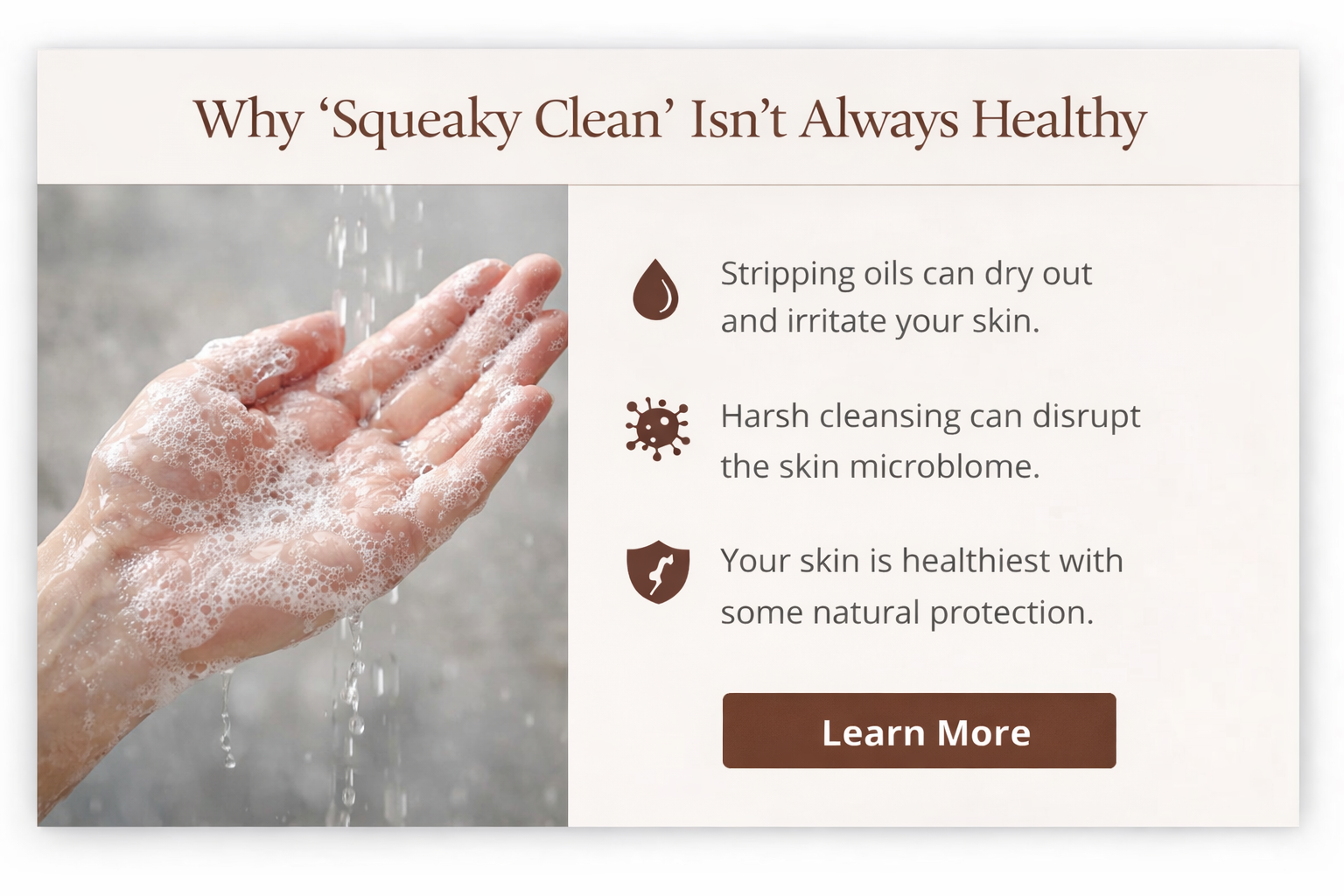
A person washing their hands with soap and water.

Start Your skin off feeling protected.

The more you understand your skin, the better choices you make about what touches it.
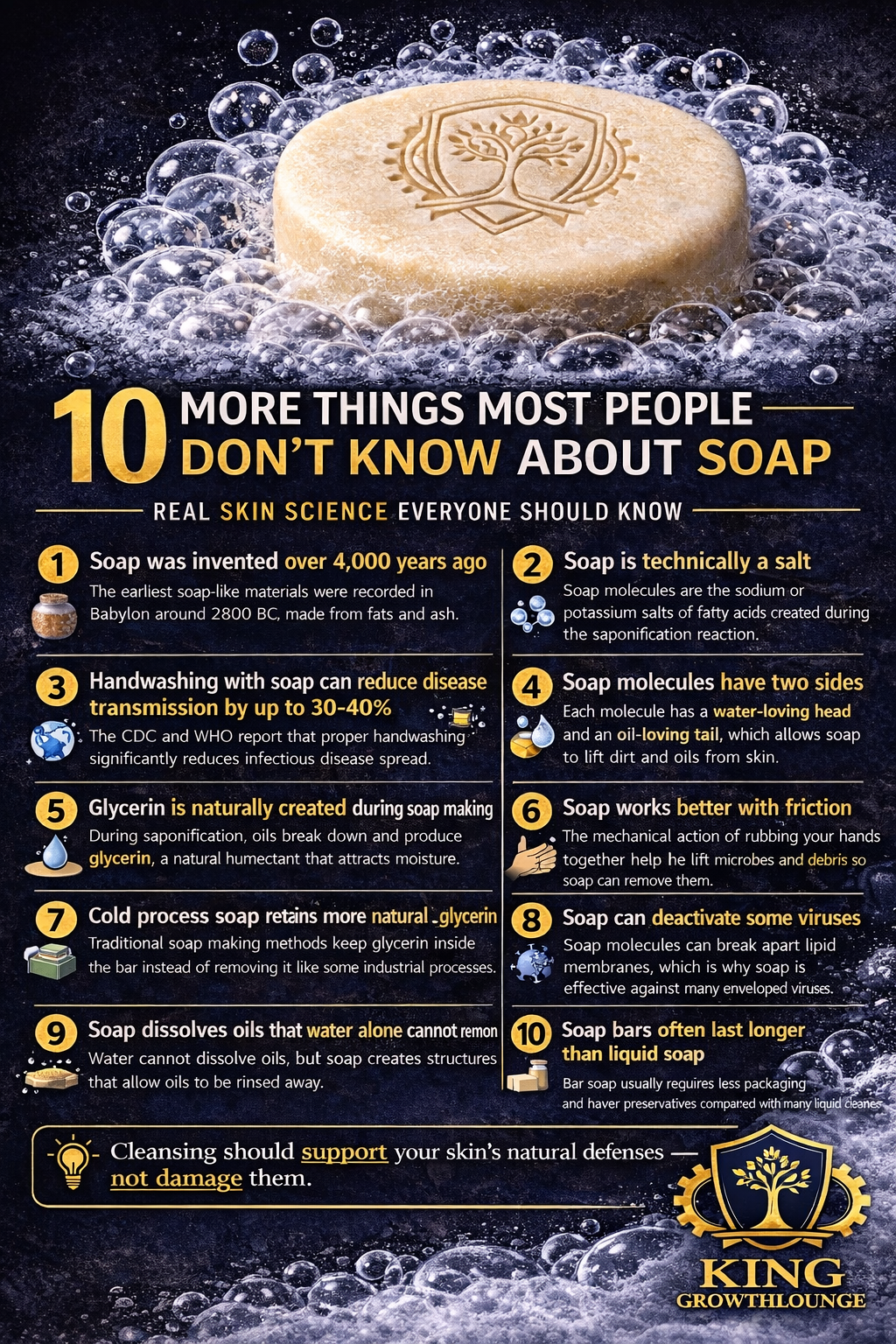
Infographic titled '10 More Things Most People Don’t Know About Soap' listing facts about soap, including its history, composition, and skin benefits, with numbered points and relevant icons, and the logo 'King Growth Lounge' at the bottom right.

Thoughtfully crafted to elevate what matters most.